
Self-erecting cranes
Folds out from a single transport and sets itself up in hours, with no mobile crane. For houses, low-rise buildings and short jobs.
5 self-erecting cranes, 1.8 to 8 tonnes.
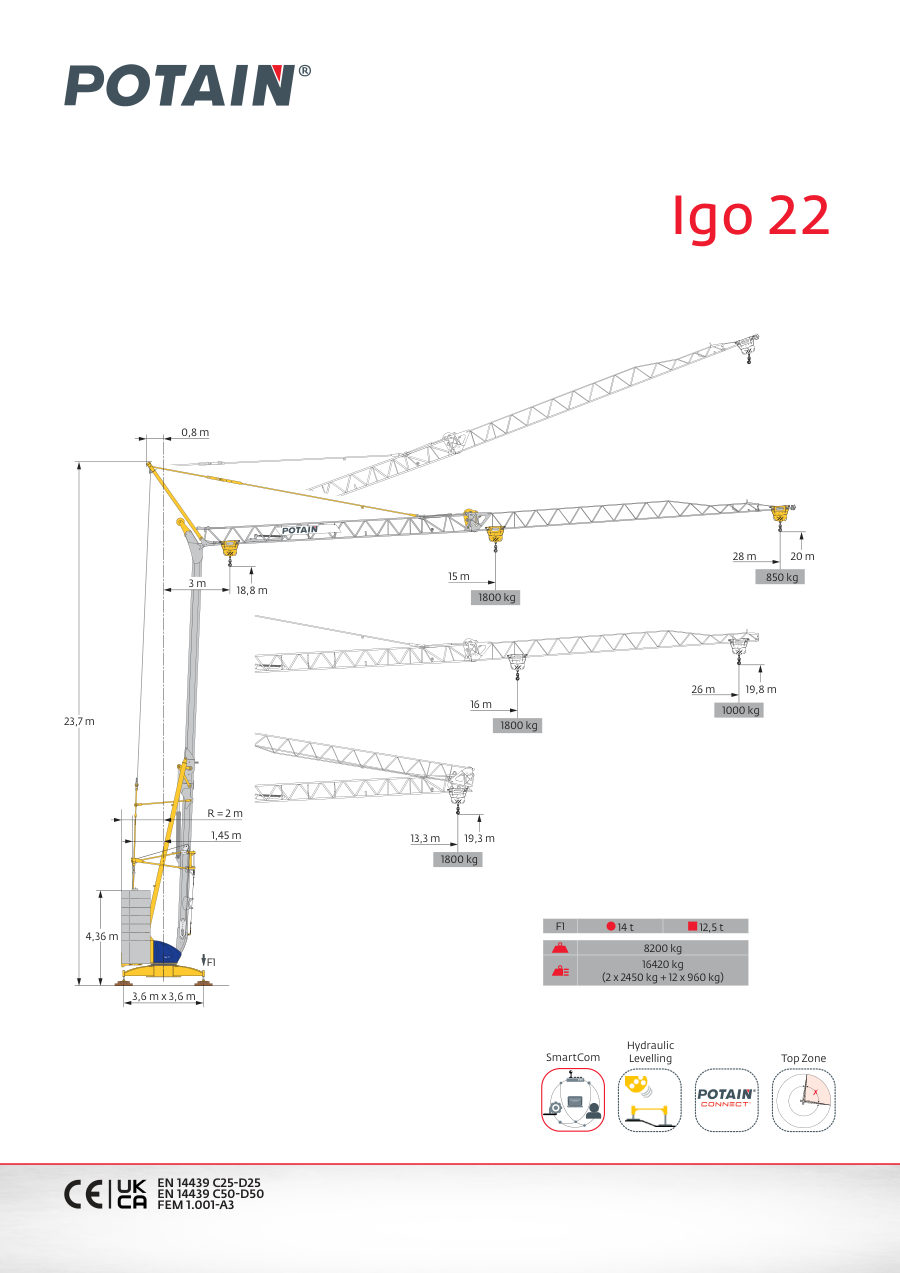
Igo 22
Our smallest crane: 1.8 tonnes on a 28-metre jib, for houses and small sites with tight access.
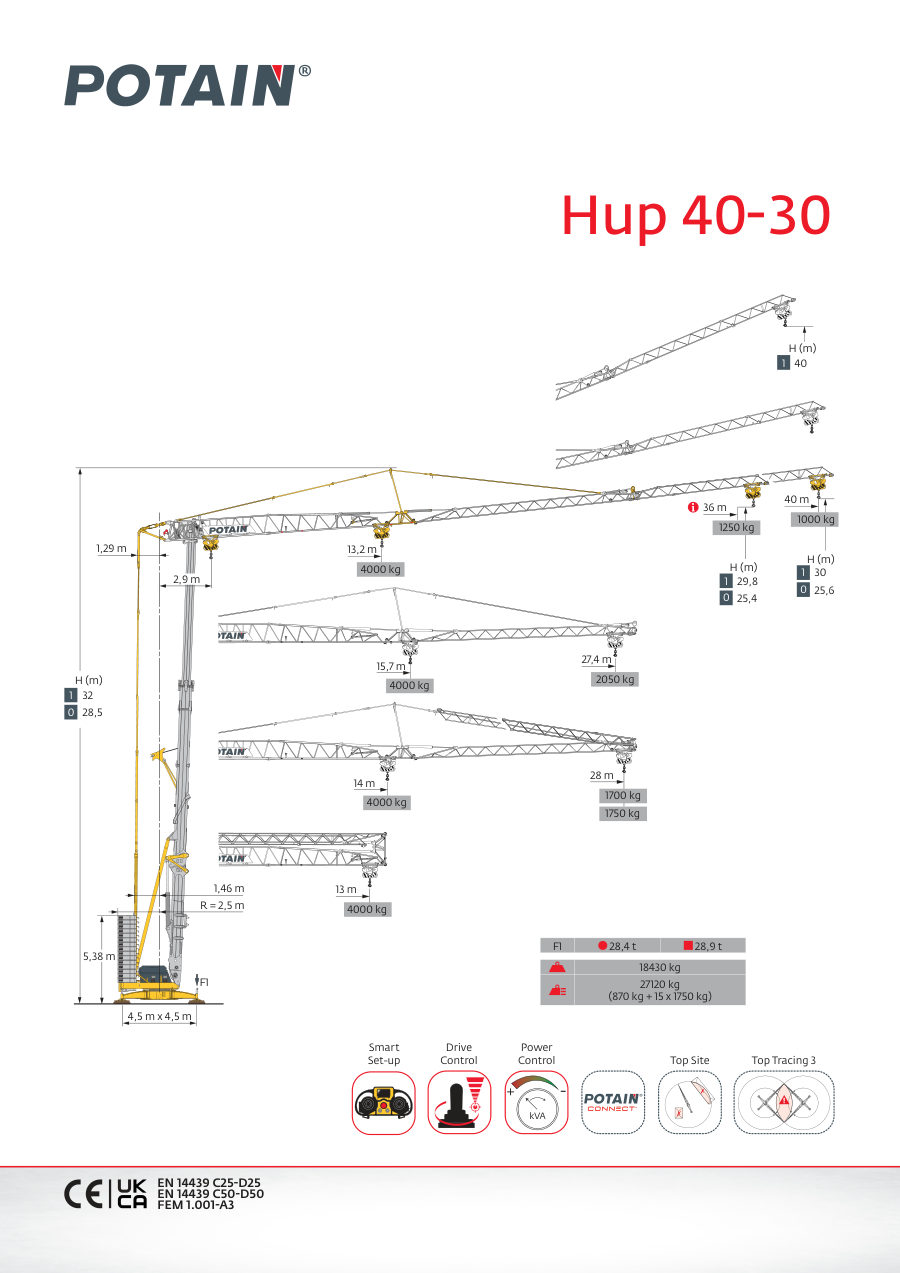
Hup 40-30
4 tonnes and a 40-metre jib, from a compact crane that sets up on a small footprint.
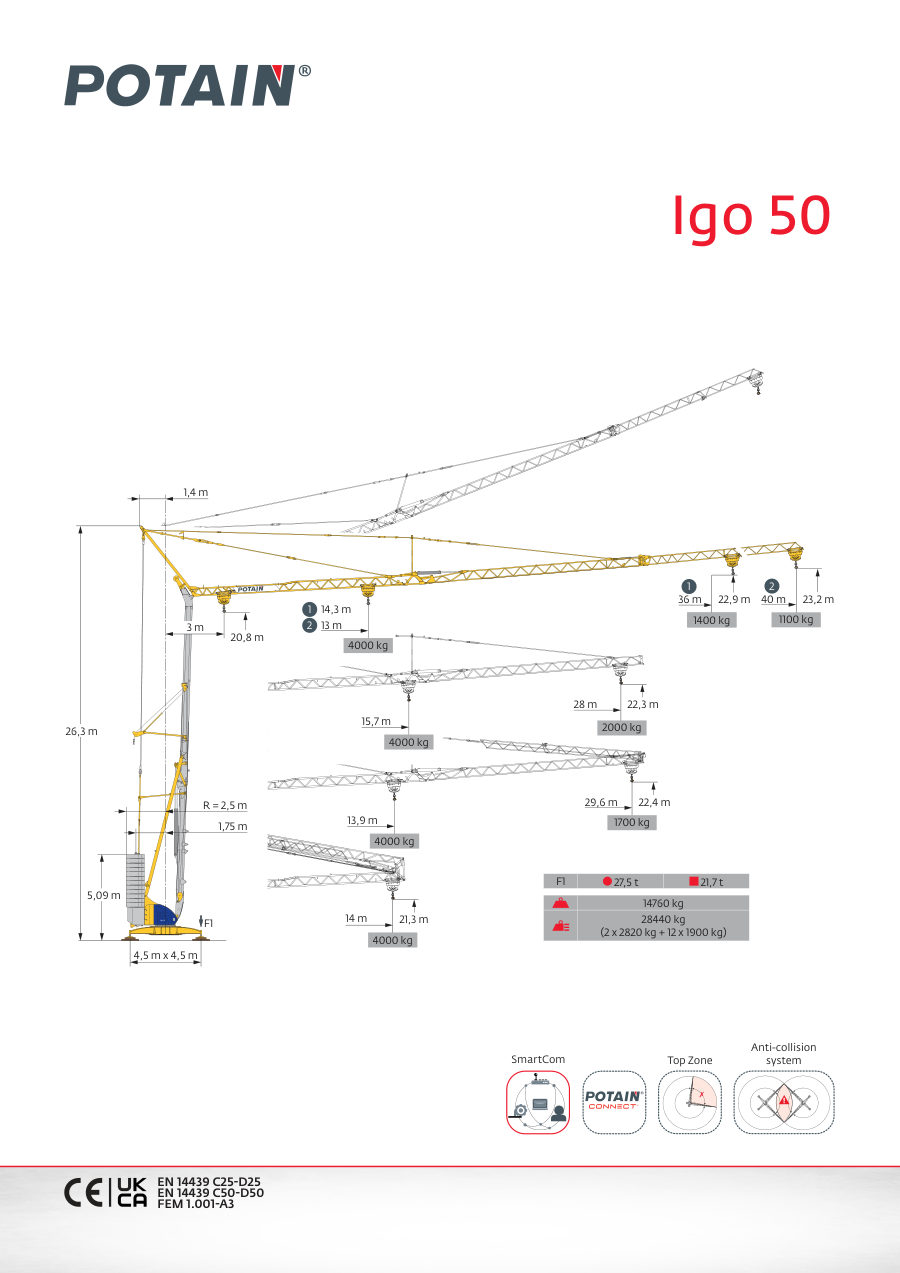
Igo 50
4 tonnes on a jib up to 40 metres, for townhouses and low-rise builds.
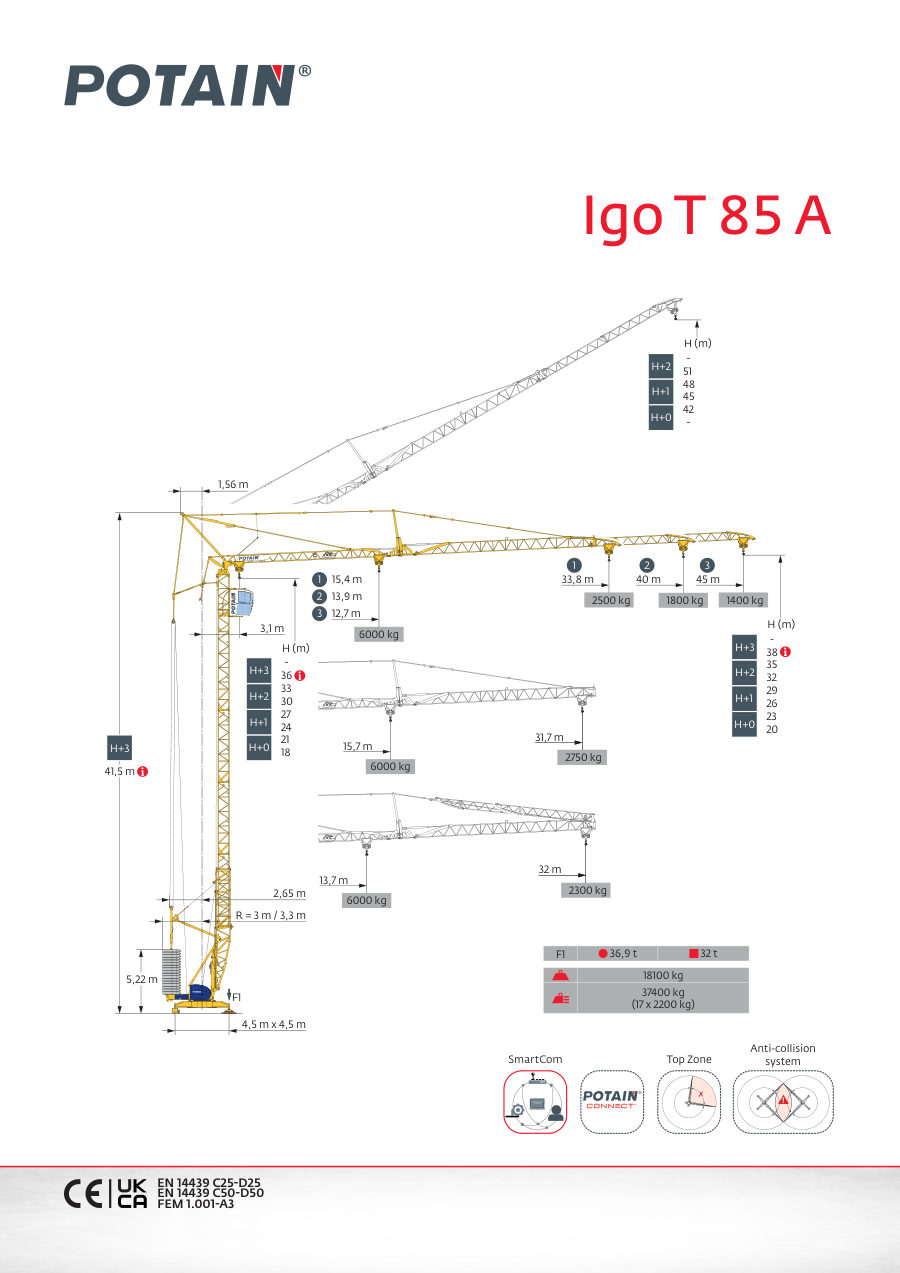
Igo T 85 A
6 tonnes on a jib up to 45 metres, with a telescopic tower for more height under the hook.
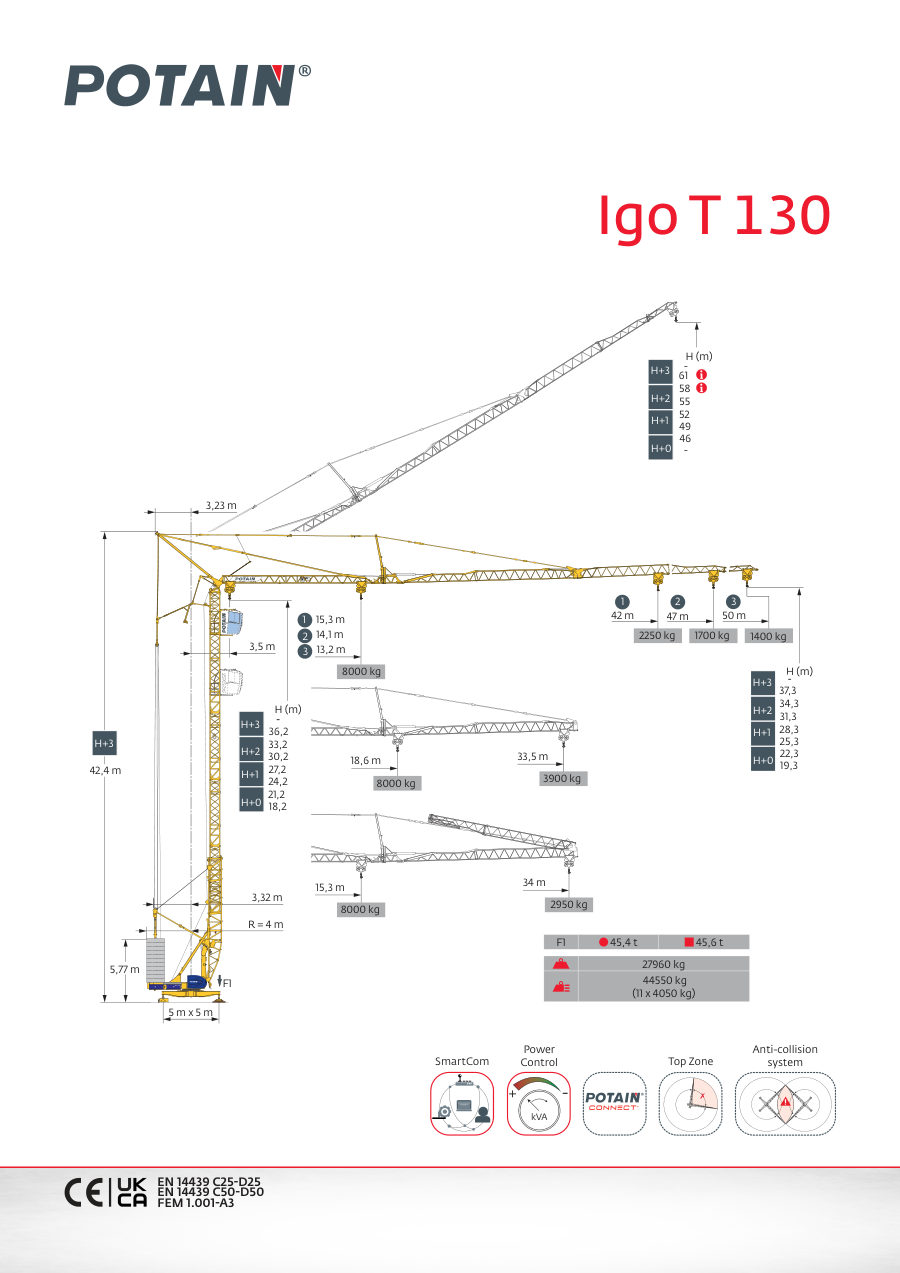
Igo T 130
Our largest self-erecting crane: 8 tonnes on a jib up to 50 metres.
Side by side.
| Model | Capacity | Max jib | At jib end | Datasheet |
|---|---|---|---|---|
| Igo 22 | 1.8 t | 28 m | 0.85 t | |
| Hup 40-30 | 4 t | 40 m | 1 t | |
| Igo 50 | 4 t | 40 m | 1.1 t | |
| Igo T 85 A | 6 t | 45 m | 1.4 t | |
| Igo T 130 | 8 t | 50 m | 1.4 t |
Every figure is read from the Potain datasheet for that crane. Capacity is the most it lifts close in; the jib-end figure is what it lifts at the tip of its longest jib.
What these terms mean
- Self-erecting
- A crane that unfolds its own tower and jib from one transport, with no mobile crane needed to put it up. Quick to set up on small sites.
- At jib end
- What the crane lifts at the very tip of the jib. That is the furthest reach, and the point where it carries the least.
Not sure which crane fits the job? Send us the lift and we'll size it