
Flat-top cranes
The jib stays level and there is nothing above it. Quick to put up, and the best value on a site with open sky around it.
6 flat-top cranes, 5 to 25 tonnes.
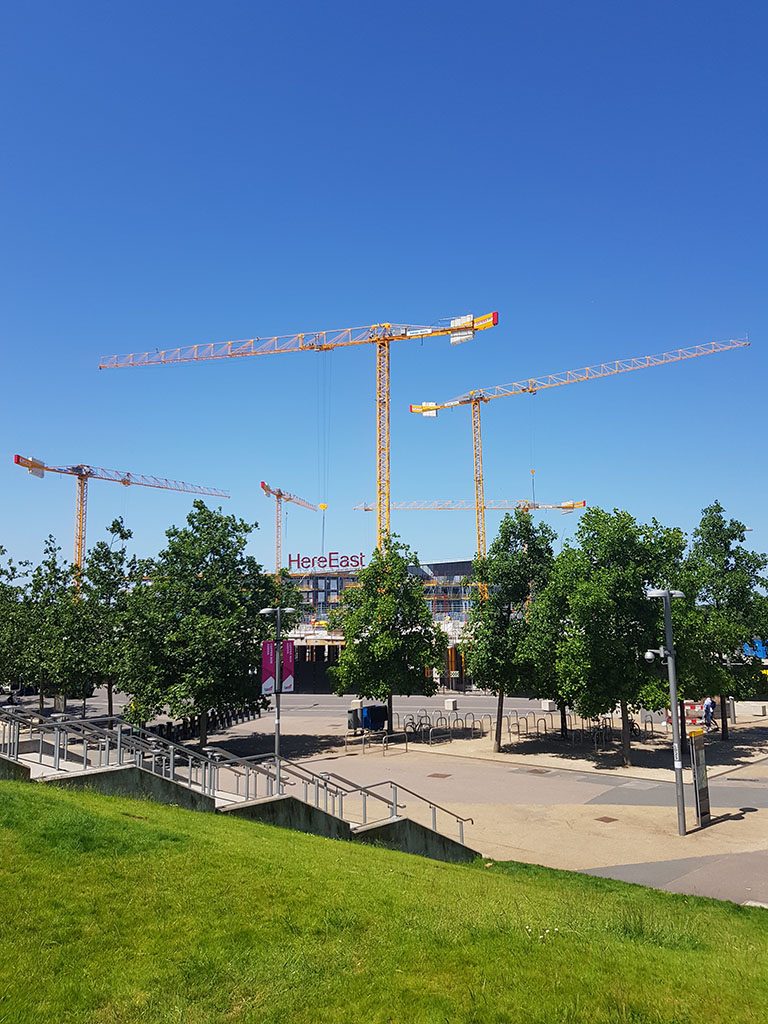
MCT88
5 tonnes and a 52-metre jib, for low-rise buildings and tight suburban sites.
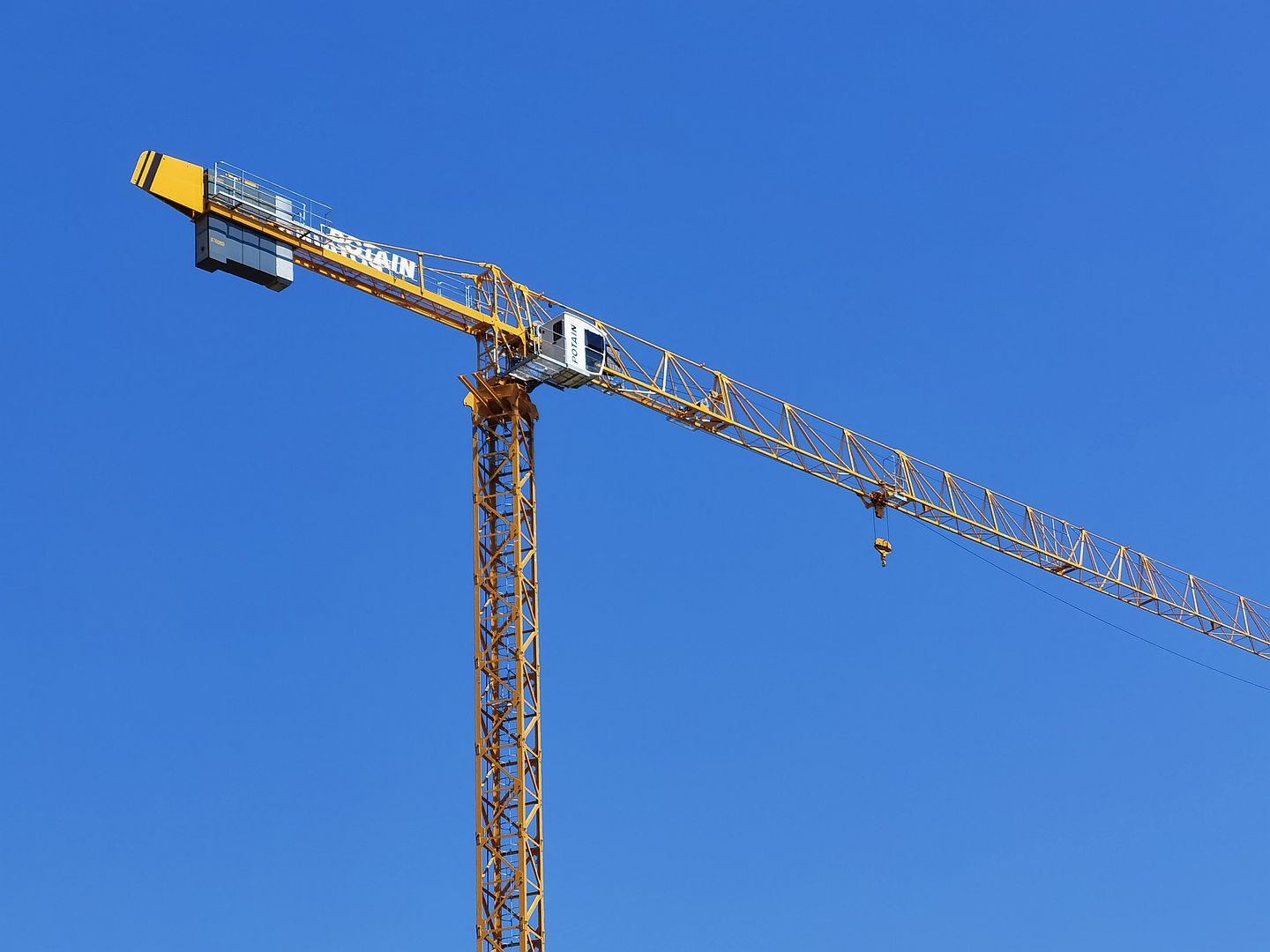
MCT135
6 tonnes on a jib up to 60 metres. A light crane with a long reach for housing and small commercial work.
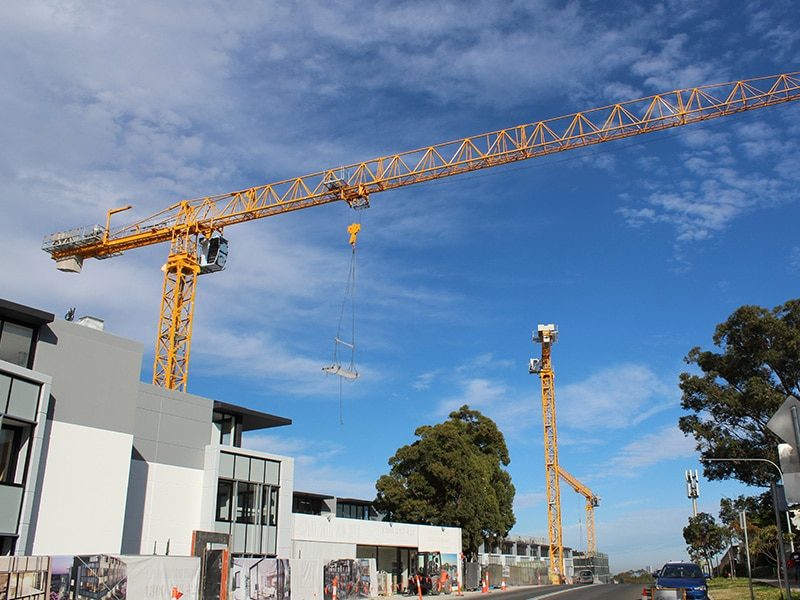
MCT205
10 tonnes and a 65-metre jib. The everyday flat-top for mid-rise apartments and commercial builds.

MCT325
16 tonnes on a jib up to 75 metres, for bigger mid-rise and high-rise jobs with room to swing.
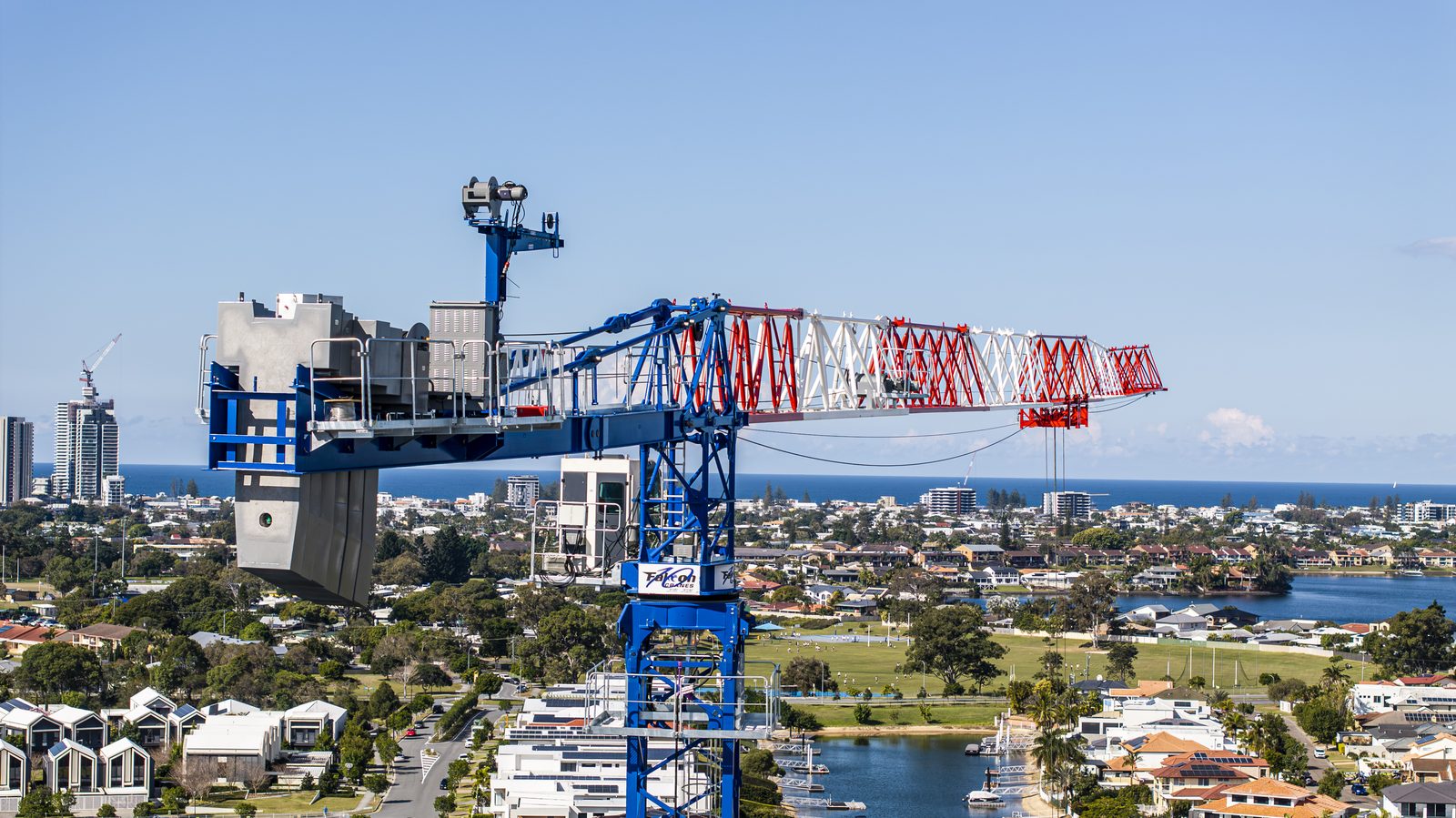
MCT385A
20 tonnes and a 75-metre jib, for residential and commercial towers with room to work overhead.
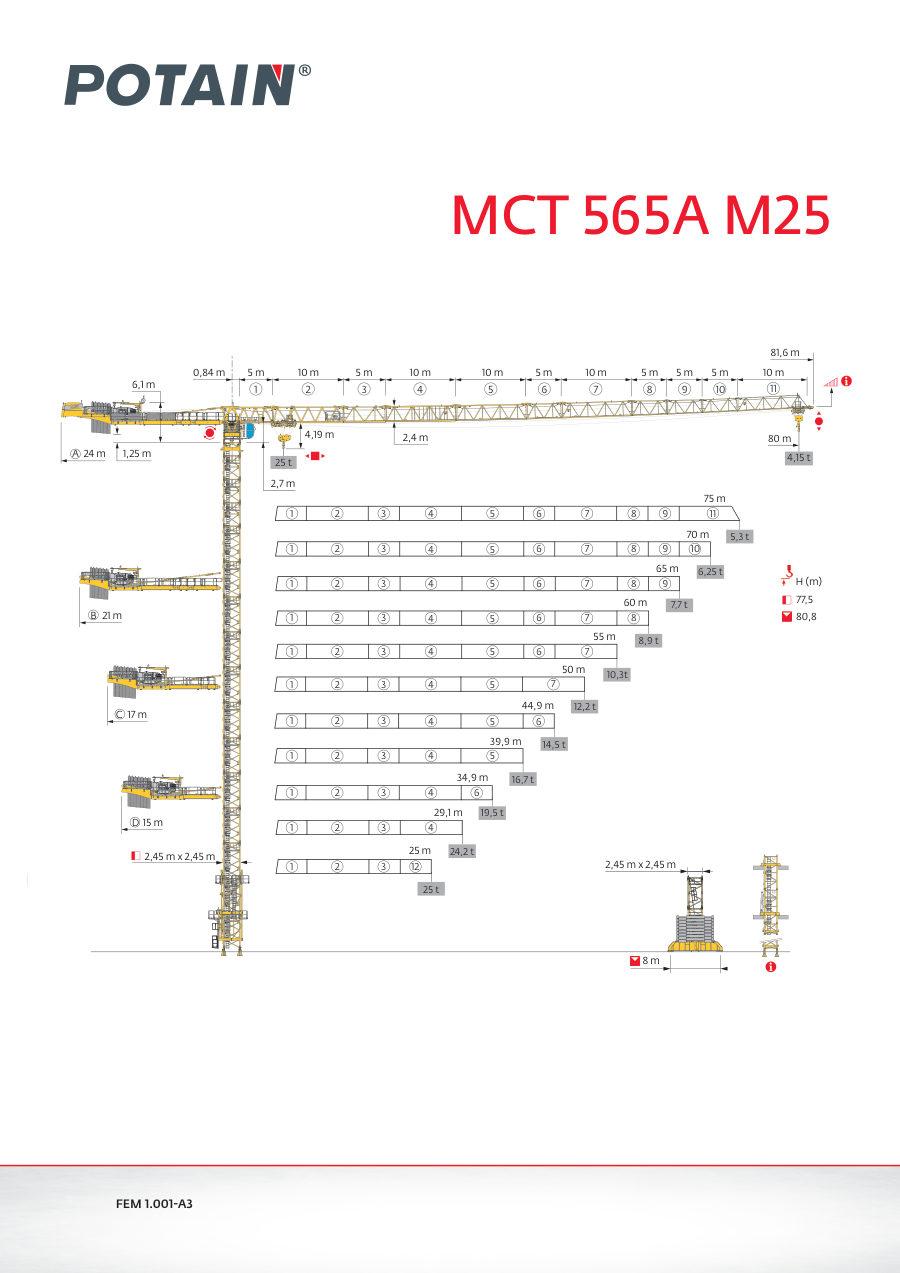
MCT565A
25 tonnes on a jib up to 80 metres. For large, open sites with heavy precast or steel.
Side by side.
| Model | Capacity | Max jib | At jib end | Datasheet |
|---|---|---|---|---|
| MCT88 | 5 t | 52 m | 1.15 t | |
| MCT135 | 6 t | 60 m | 1.5 t | |
| MCT205 | 10 t | 65 m | 1.75 t | |
| MCT325 | 16 t | 75 m | 2.3 t | |
| MCT385A | 20 t | 75 m | 3.4 t | |
| MCT565A | 25 t | 80 m | 4.15 t |
Every figure is read from the Potain datasheet for that crane. Capacity is the most it lifts close in; the jib-end figure is what it lifts at the tip of its longest jib.
What these terms mean
- Flat-top
- The jib stays horizontal. Simpler and cheaper to erect where there is room overhead and nothing close by to swing around.
- At jib end
- What the crane lifts at the very tip of the jib. That is the furthest reach, and the point where it carries the least.
Not sure which crane fits the job? Send us the lift and we'll size it