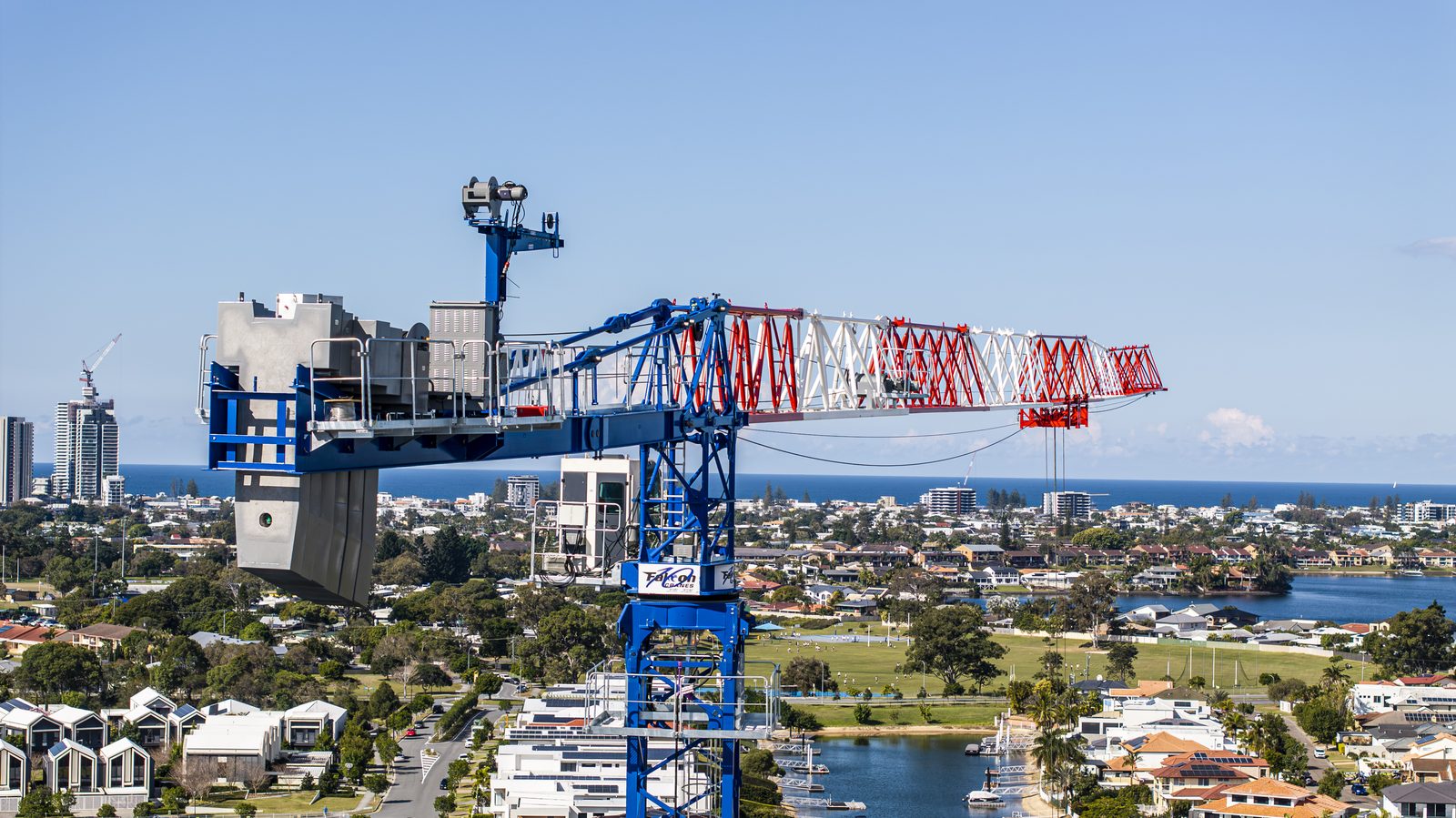
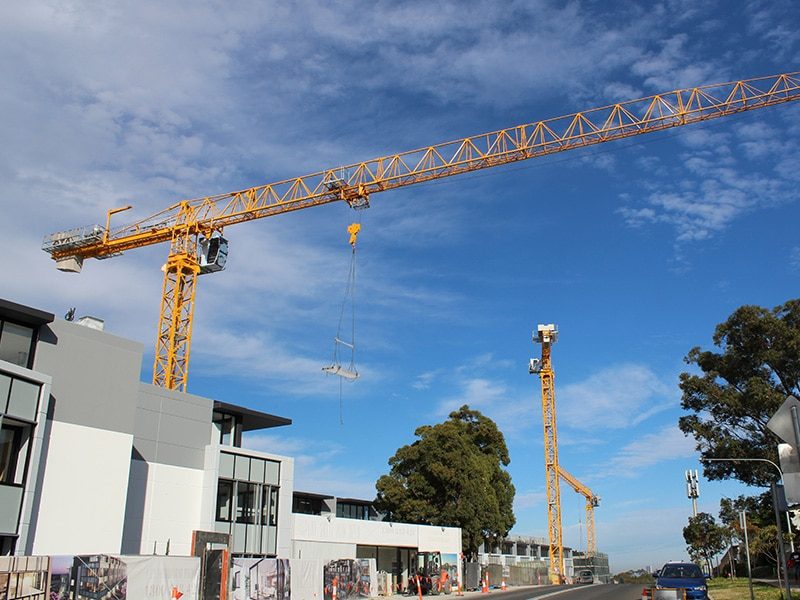
MCT565A
25 tonnes on a jib up to 80 metres. For large, open sites with heavy precast or steel.
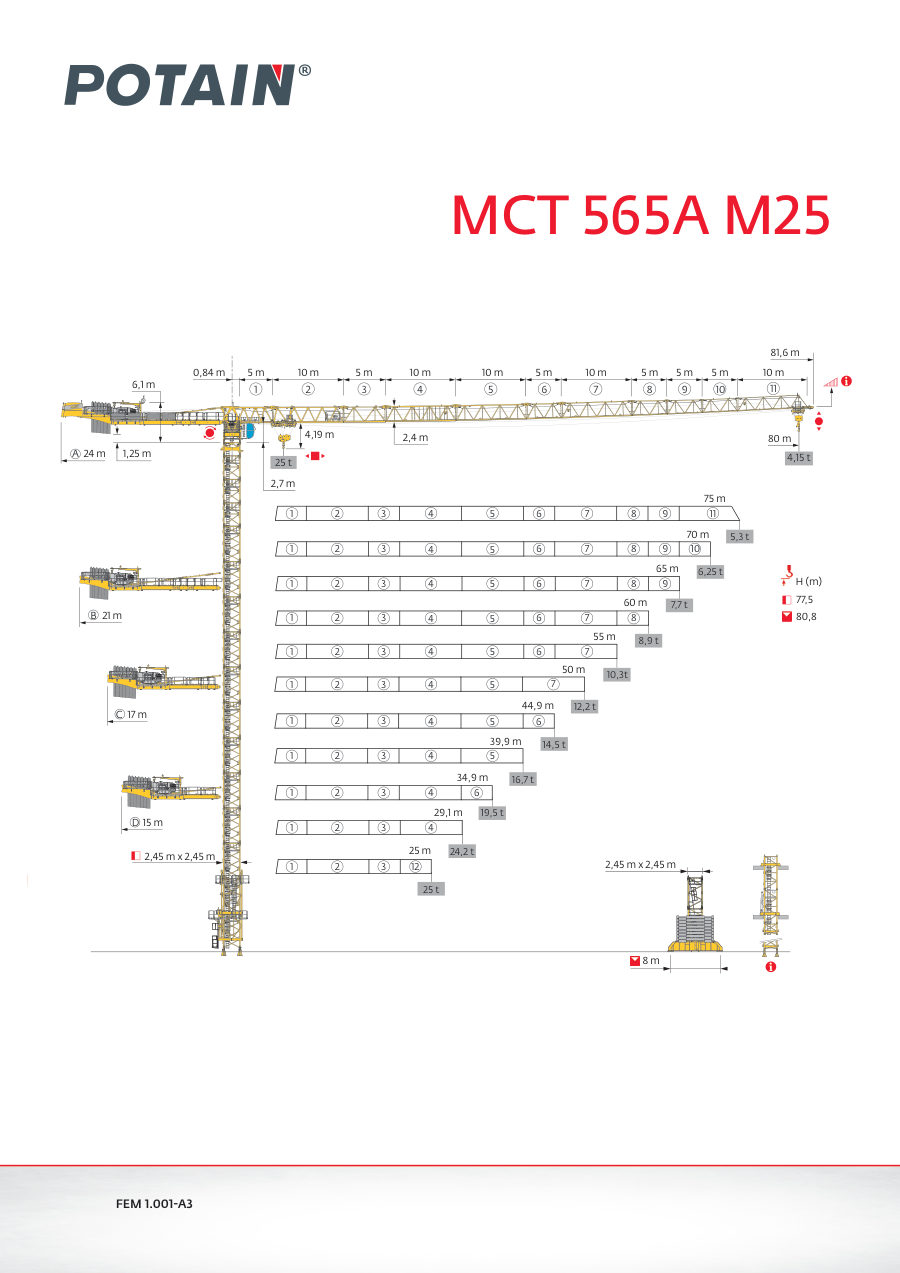
| Model | MCT 565 A M25 |
| Type | Flat-top |
| Maximum capacity | 25 t |
| Maximum jib length | 80m |
| Capacity at jib end | 4.15 t |
| Maximum capacity by reeving | Four fall25 tTwo fall12.5 t |
| Maximum line speed | 195m/min |
| Load at jib end, by jib length | 80m4.15 t75m5.3 t70m6.25 t65m7.7 t60m8.9 t55m10.3 t50m12.2 t45m14.1 t40m16.6 t35m19.4 t30m24.2 t25m25 t |
What these terms mean
- Flat-top
- The jib stays horizontal. Simpler and cheaper to erect where there is room overhead and nothing close by to swing around.
- Load curve
- How much the crane can lift at each distance from the tower. The further out the hook goes, the less it can carry.
- 2 fall / 4 fall
- How many rope lines hold the hook. More lines lift more weight and run slower; fewer lines are lighter and faster.
- At jib end
- What the crane lifts at the very tip of the jib. That is the furthest reach, and the point where it carries the least.
- Maximum line speed
- How fast the hook rises with a light load, on the fastest winch Potain offers for this crane. Heavier loads lift more slowly.
The MCT565A is one of 6 flat-top cranes in our range. It is a flat-top: the jib stays horizontal, which is the simpler, quicker crane to erect where there is room overhead.
In the group, the MCT385A is the next size down (20 t, 75m jib).
How much it lifts at each radius.
What the MCT565A can lift at each distance from the tower, for the reeving and jib length you choose. Every dot comes from its Potain datasheet.
Dots are the datasheet's figures. Between two dots, plan on the lower one. The spec table lists the best jib-end figure for each jib across the reeving options. The datasheet's figures change from four fall to two fall where it marks them in red. Past that point, four fall is the two-fall figure less 1.22 t, as the sheet notes, and two fall carries 12.5 t out to where the sheet says. Check the datasheet for your exact setup before planning a lift.