Igo 50
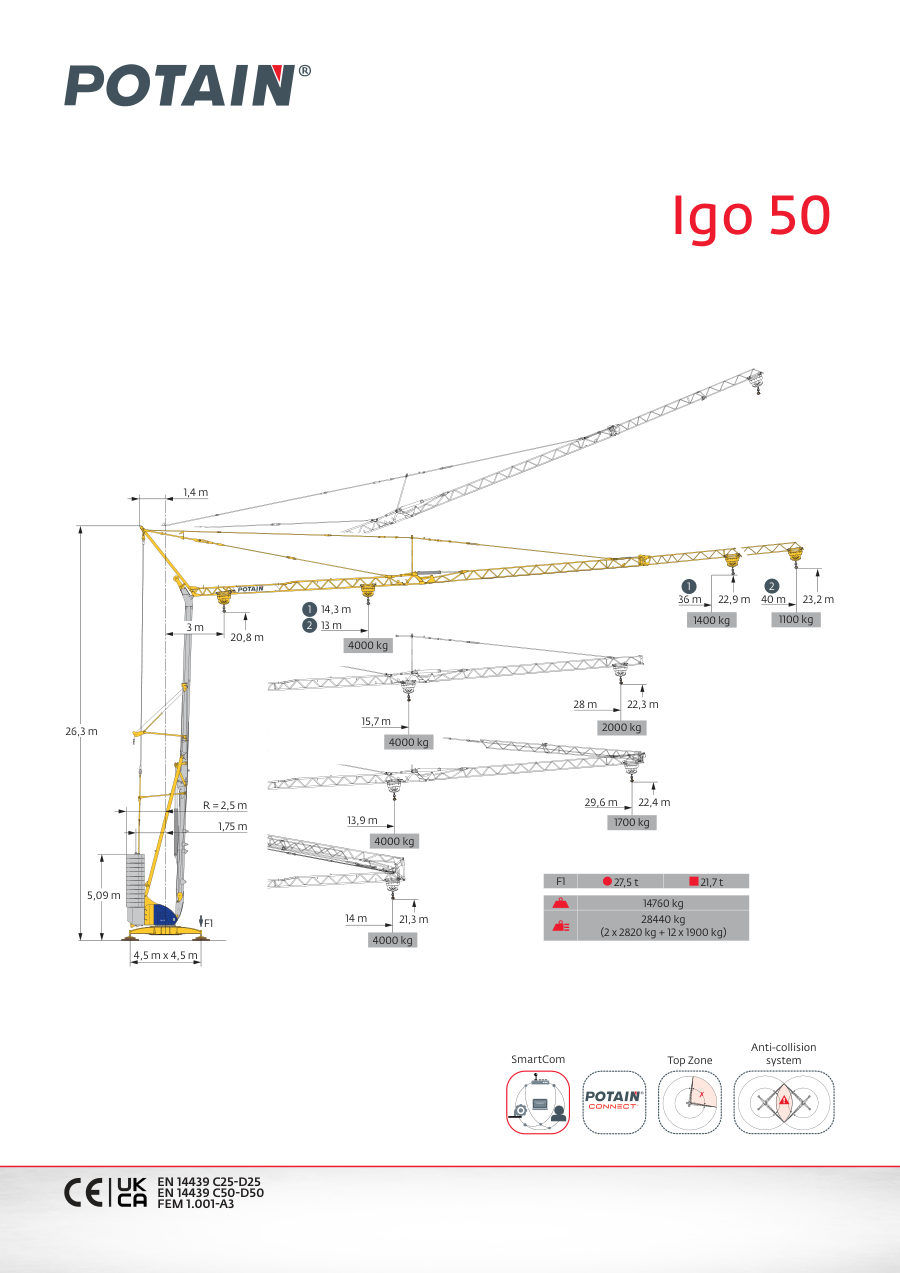
4 tonnes on a jib up to 40 metres, for townhouses and low-rise builds.
| Model | Igo 50 |
| Type | Self-erecting |
| Maximum capacity | 4 t |
| Maximum jib length | 40m |
| Capacity at jib end | 1.1 t |
| Radius with maximum load | 40m jib13m |
| Load at jib end, by jib length | 40m1.1 t36m1.4 t28m2 t |
What these terms mean
- Self-erecting
- A crane that unfolds its own tower and jib from one transport, with no mobile crane needed to put it up. Quick to set up on small sites.
- Load curve
- How much the crane can lift at each distance from the tower. The further out the hook goes, the less it can carry.
- Radius with maximum load
- How far out the hook can go while still lifting the crane's maximum load. Beyond it, the load the crane can carry starts to fall.
- At jib end
- What the crane lifts at the very tip of the jib. That is the furthest reach, and the point where it carries the least.
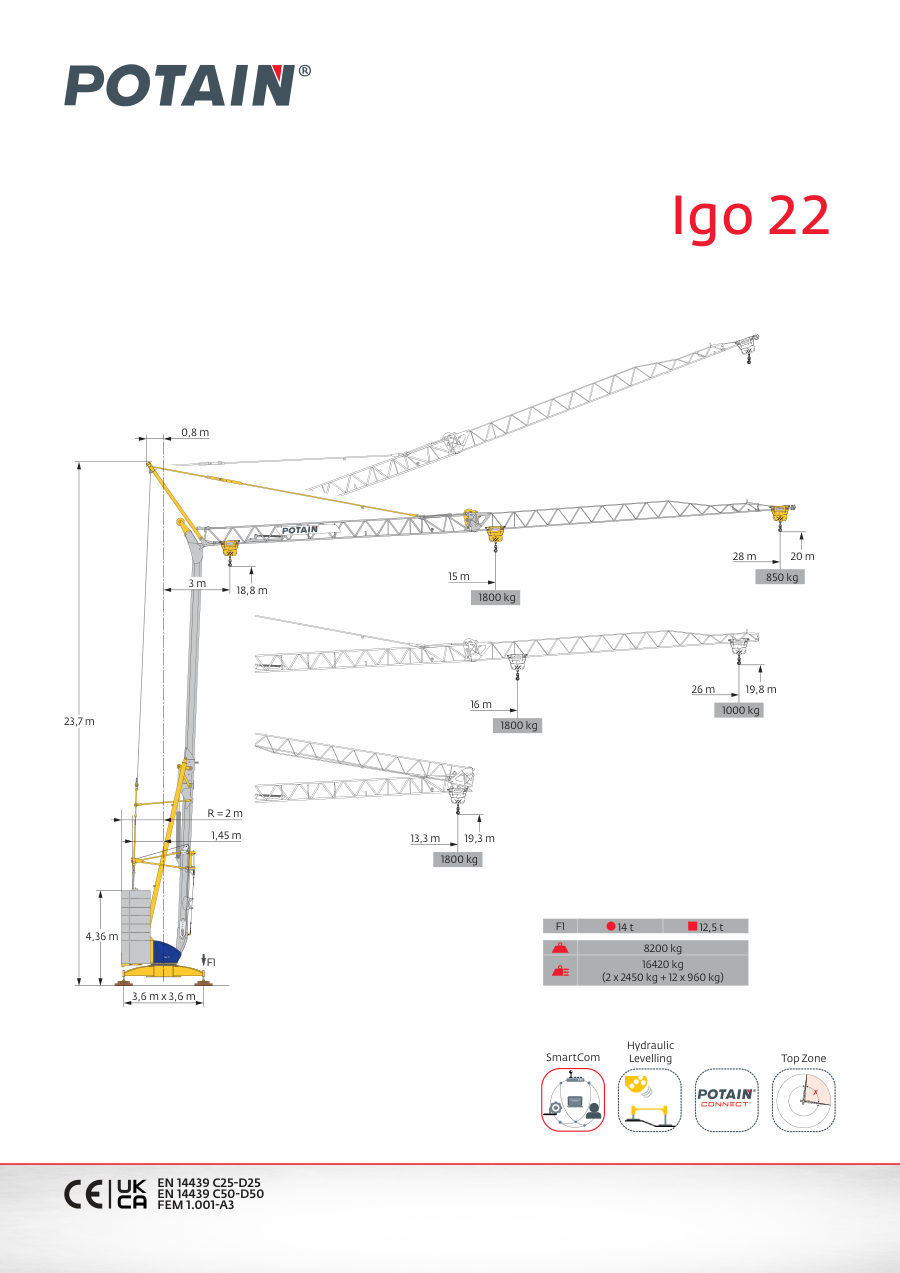
The Igo 50 is one of 5 self-erecting cranes in our range. It is a self-erecting crane: it unfolds its own tower and jib from one transport, so it goes up in hours with no mobile crane.
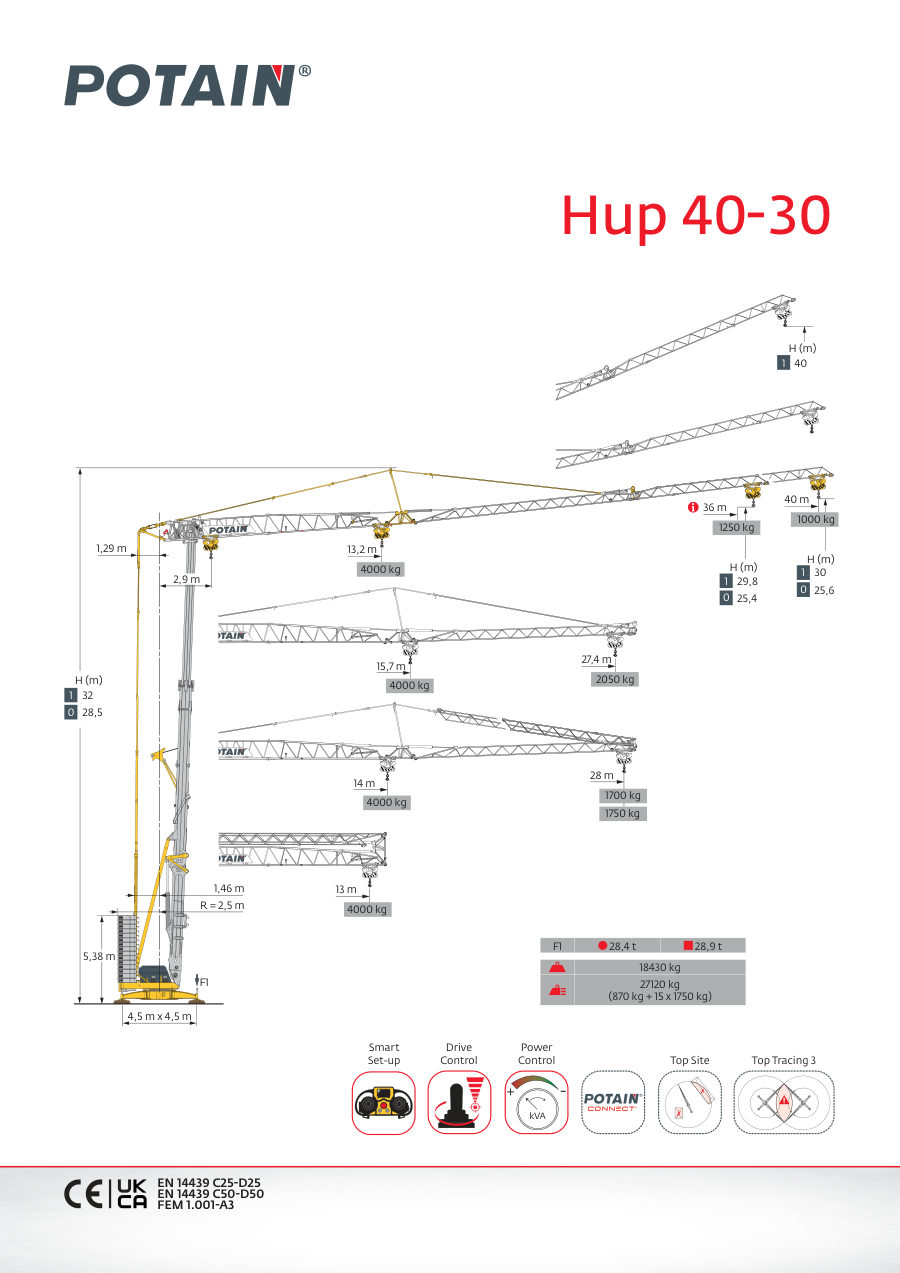
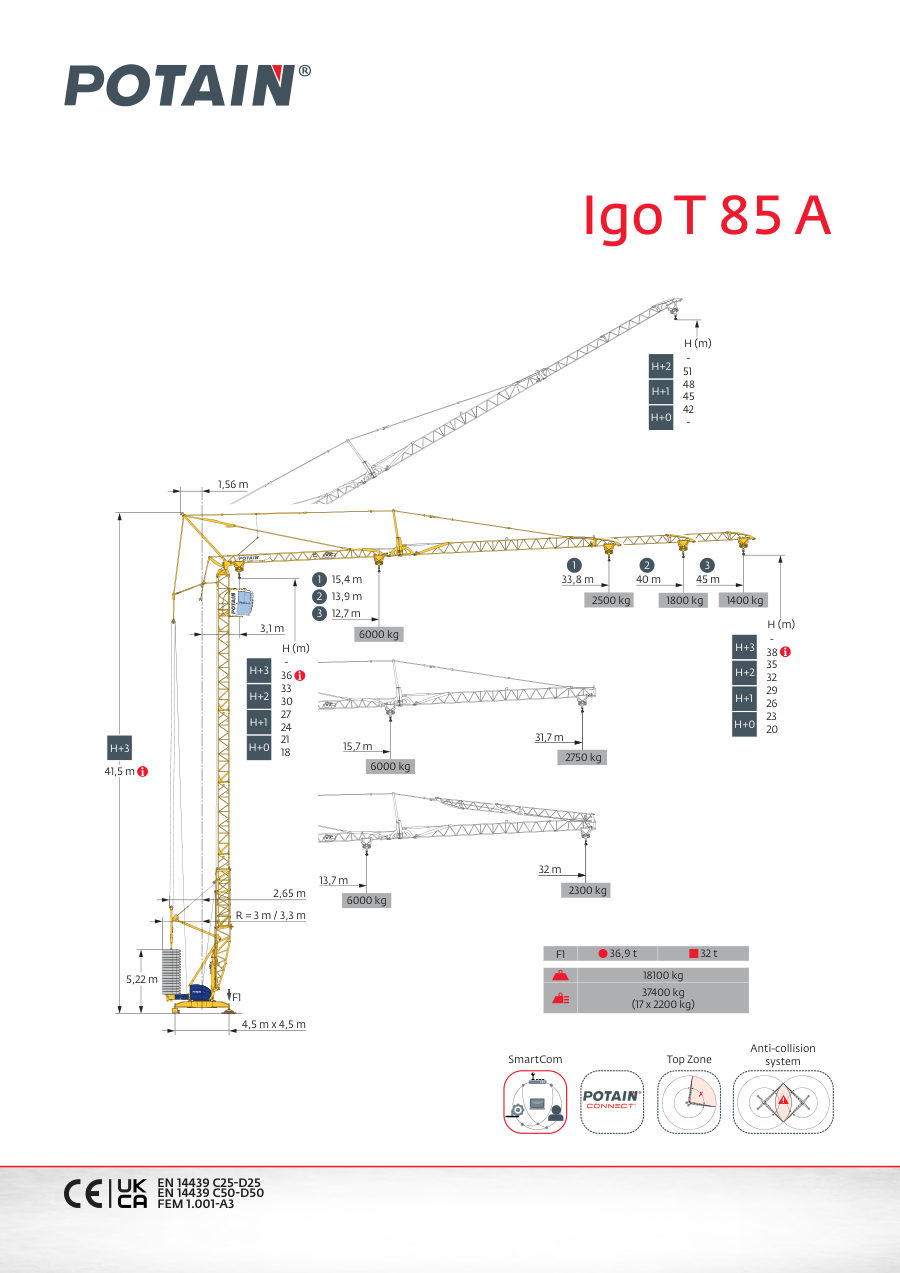
In the group, the Igo T 85 A is the next size up (6 t, 45m jib) and the Hup 40-30 is the next size down (4 t, 40m jib).
How much it lifts at each radius.
What the Igo 50 can lift at each distance from the tower, for the reeving and jib length you choose. Every dot is a figure printed in its Potain datasheet.
Dots are the printed figures. Between two dots, plan on the lower one. The spec table lists the best jib-end figure for each jib across the reeving options. Flat jib only; the raised-jib charts are in the datasheet. Check the datasheet for your exact setup before planning a lift.