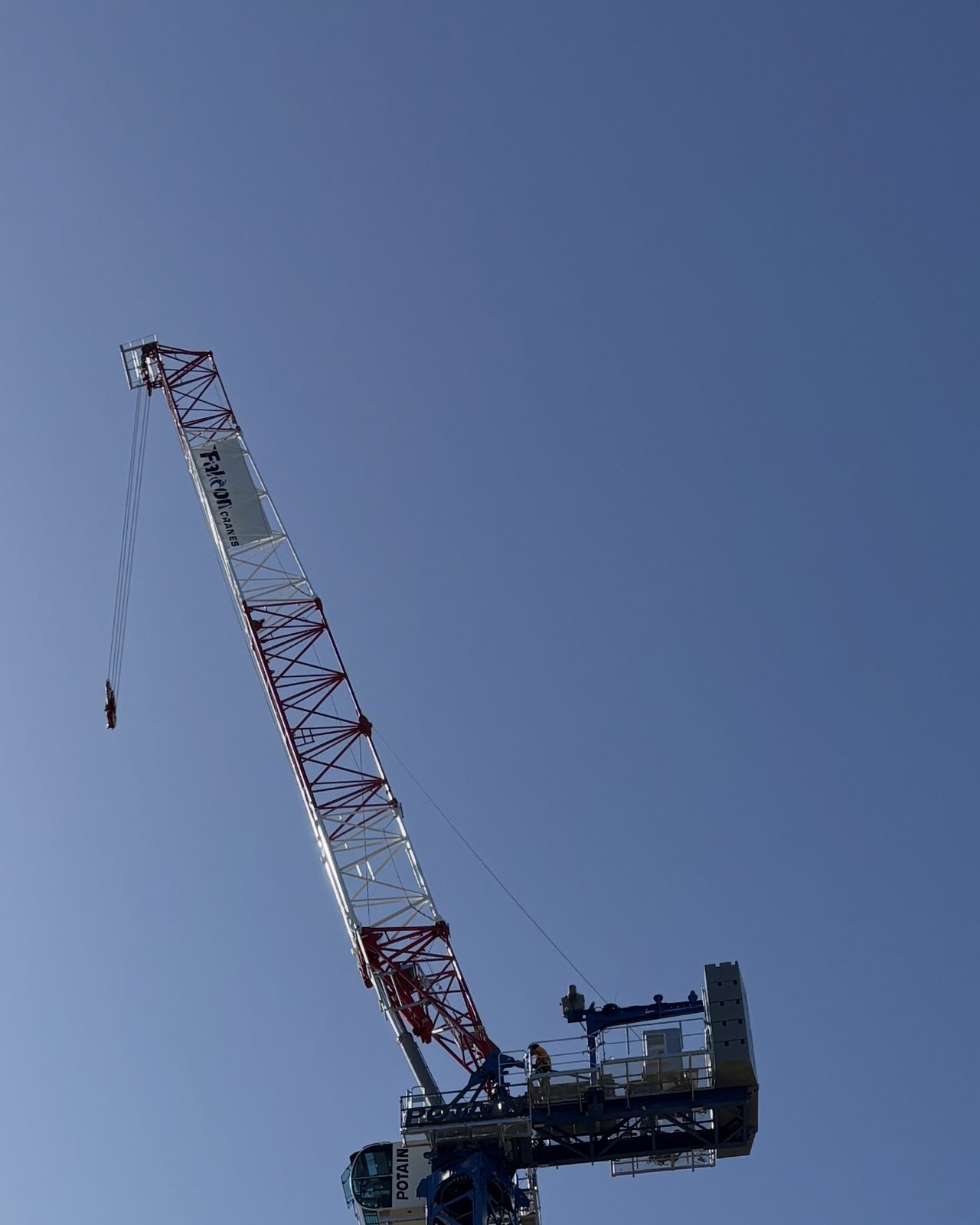
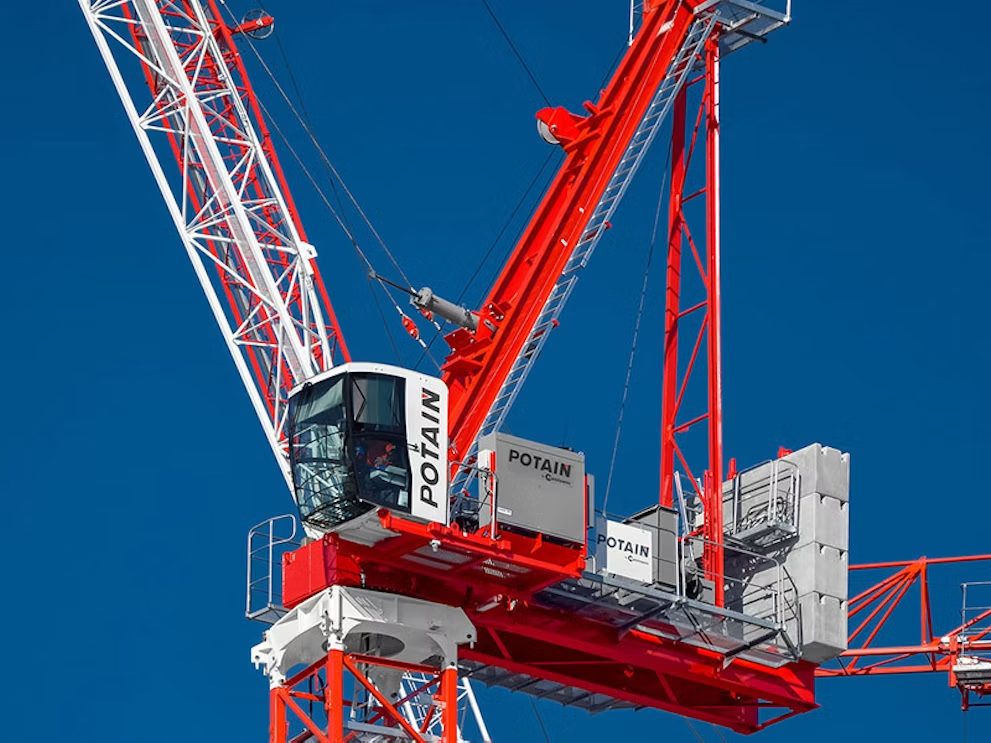
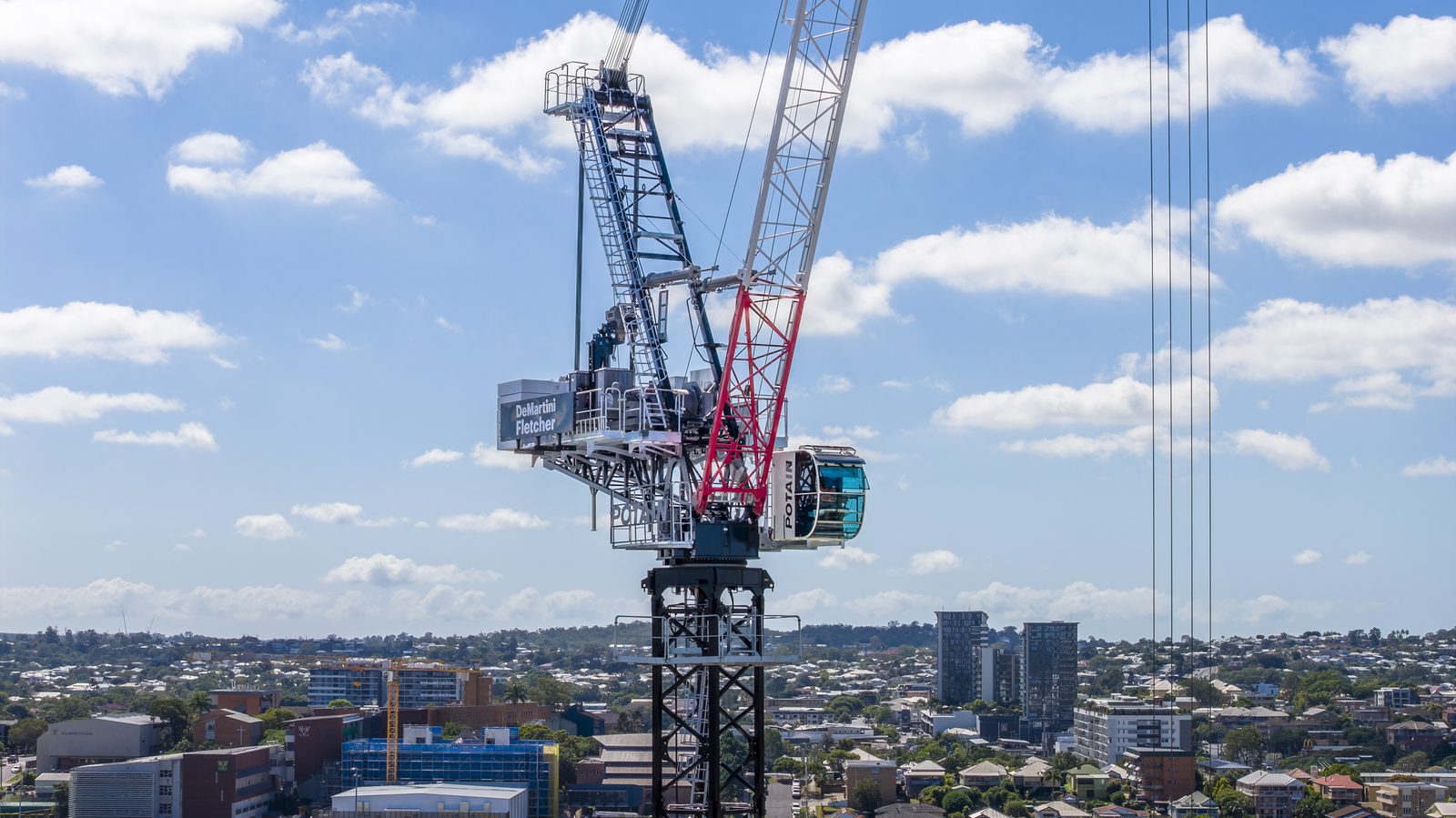
MCH125
8 tonnes on a hydraulic luffing jib up to 50 metres. A compact luffer for tight sites next to other buildings.
| Model | MCH 125 |
| Type | Hydraulic luffing |
| Maximum capacity | 8 t |
| Maximum jib length | 50m |
| Capacity at jib end | 2 t |
| Maximum capacity by reeving | Four fall8 tTwo fall4 t |
| Maximum line speed | 100m/min |
| Load at jib end, by jib length | 50m2 t45m2.5 t40m3.2 t35m4 t30m5 t |
What these terms mean
- Luffing jib
- The jib (the arm) raises and lowers instead of staying flat. That lets the crane work tight city sites and swing its load clear of nearby buildings.
- Hydraulic luffing
- A luffing jib raised and lowered by a hydraulic ram rather than a rope winch. Compact, and quick to set up on a confined site.
- Load curve
- How much the crane can lift at each distance from the tower. The further out the hook goes, the less it can carry.
- 2 fall / 4 fall
- How many rope lines hold the hook. More lines lift more weight and run slower; fewer lines are lighter and faster.
- At jib end
- What the crane lifts at the very tip of the jib. That is the furthest reach, and the point where it carries the least.
- Maximum line speed
- How fast the hook rises with a light load, on the fastest winch Potain offers for this crane. Heavier loads lift more slowly.
The MCH125 is one of 6 luffing cranes in our range. It is a hydraulic luffing crane: a ram raises and lowers the jib, so it works sites hemmed in by other buildings, other cranes or a flight path.
In the group, the MCH175A is the next size up (10 t, 55m jib).
How much it lifts at each radius.
What the MCH125 can lift at each distance from the tower, for the reeving and jib length you choose. Every dot is a figure printed in its Potain datasheet.
Dots are the printed figures. Between two dots, plan on the lower one. The spec table lists the best jib-end figure for each jib across the reeving options. Check the datasheet for your exact setup before planning a lift.